
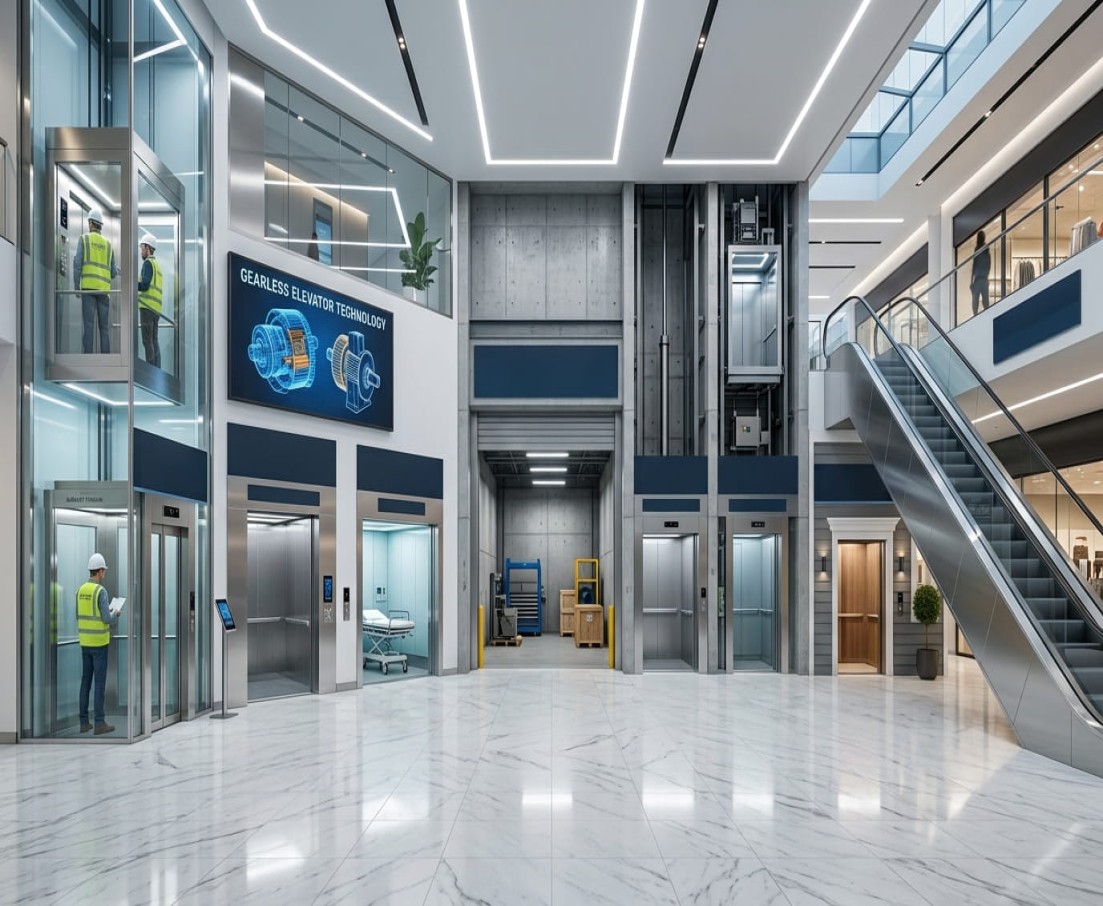
Complete Guide to Different Types of Elevators and Lifts
Modern buildings are designed for comfort, accessibility, and efficiency, making elevators an essential part of residential, commercial, and industrial infrastructure. Whether it is a luxury villa, apartment, shopping mall, office tower, hospital, warehouse, factory, or airport, choosing the right elevator improves convenience, safety, and property value.
Today, elevators are available in various technologies, capacities, and configurations. From premium home lifts and compact residential elevators to heavy-duty goods elevators and energy-efficient machine room-less elevators, every application has a specialized solution. Whether you need a luxury elevator for bungalow, a modern lift for hotels, or high-capacity elevators for commercial buildings, selecting the right system is essential for long-term performance.
This guide explains the different types of elevators, their applications, benefits, technical considerations, and buying tips to help homeowners, architects, builders, contractors, and facility managers make informed decisions.
What is an Elevator?
An elevator, also called a lift, is a vertical transportation system used to move people or goods safely between different floors of a building. Modern elevators use advanced electrical, hydraulic, and automated control systems to deliver smooth, safe, and energy-efficient operation.
Benefits of Installing an Elevator
- Improves accessibility for elderly people and individuals with mobility challenges.
- Saves time and makes movement between floors convenient.
- Increases residential and commercial property value.
- Enhances user convenience and building functionality.
- Supports heavy material handling in industrial facilities.
- Helps meet applicable accessibility requirements.
- Improves operational efficiency in commercial environments.
How Does an Elevator Work?
An elevator operates using a drive system, guide rails, safety mechanisms, and intelligent controllers. Depending on the elevator design, the cabin moves using an electric traction machine or hydraulic mechanism.
The main components of an elevator include:
- Electric Motor: Provides the power required for elevator movement.
- Drive Machine: Controls the movement of the elevator cabin.
- Guide Rails: Maintain smooth and accurate vertical movement.
- Elevator Cabin: Carries passengers or goods between floors.
- Counterweight: Balances the cabin in traction elevators.
- Landing Doors: Provide access to the elevator at each floor.
- Control Panel: Manages floor selection and elevator operation.
- Safety Gear: Helps stop the elevator during specified emergency conditions.
- Door Sensors: Detect obstructions and support safe door operation.
- Automatic Rescue Device (ARD): Helps move the elevator to a suitable floor during certain power failures.
- Emergency Alarm: Allows passengers to request assistance.
- Buffers: Help absorb impact at the bottom of the elevator shaft.
When a user selects a floor, the controller activates the motor or hydraulic system, moving the cabin while multiple safety devices monitor its operation.
Different Types of Elevators and Lifts
Different buildings require different elevator configurations depending on their architectural design, passenger traffic, lifting capacity, available space, and usage requirements. Here are some of the most commonly used elevator types for residential, commercial, hospitality, healthcare, and industrial applications.
1. Home Lift
Home elevators are designed for villas, duplex homes, bungalows, and independent residential properties. They improve accessibility for elderly family members and individuals with mobility challenges while adding luxury and increasing property value.
Home lifts are available in different cabin designs, capacities, and drive technologies to suit residential architecture. A luxury elevator for bungalow can be customized with elegant interiors, premium finishes, automatic doors, and space-efficient configurations.
Best For: Villas, duplex houses, luxury homes, and multi-storey bungalows.
Advantages:
- Compact and space-saving design.
- Low power consumption with suitable drive technology.
- Elegant and customizable interiors.
- Quiet and comfortable operation.
- Convenient accessibility for family members.
- Improves residential property value.
2. Passenger Elevator
Passenger elevators are designed to transport people safely and comfortably in commercial buildings, offices, apartments, hotels, schools, and shopping malls. They are available in different capacities and speeds to accommodate varying passenger traffic requirements.
Passenger lifts for residential apartments provide convenient movement for residents, while elevators for highrise apartments require suitable speed, capacity, traffic management, and advanced control systems to handle frequent usage efficiently.
Similarly, a lift for commercial space should be selected according to building occupancy, number of floors, and expected visitor movement.
Applications:
- Residential complexes and apartments.
- Corporate offices and business centers.
- Hotels and hospitality buildings.
- Hospitals and healthcare facilities.
- Educational institutions.
- Commercial complexes and retail properties.
Advantages:
- Fast and convenient vertical transportation.
- Comfortable passenger experience.
- Different passenger capacity options.
- Energy-efficient drive technologies.
- Modern cabin designs and aesthetics.
3. Goods Elevator
Goods elevators are built for transporting heavy materials, equipment, and products in factories, warehouses, manufacturing plants, and logistics centers. These elevators feature durable construction and higher load capacities to support demanding industrial operations.
Applications:
- Warehouses and distribution centers.
- Factories and manufacturing units.
- Industrial plants.
- Packaging and processing facilities.
- Logistics and storage facilities.
Advantages:
- High load-carrying capacity.
- Rugged construction.
- Reliable industrial performance.
- Reduced manual material handling.
- Improved workplace productivity.
4. Hydraulic Elevator
Hydraulic elevators operate using hydraulic cylinders and fluid pressure to move the elevator platform or cabin. They are suitable for selected low- to mid-rise building applications where smooth operation and lifting capacity are important considerations.
Benefits:
- Smooth lifting and lowering operation.
- Suitable for specific low-rise applications.
- Good lifting capacity.
- Flexible installation configurations.
- Reliable performance with proper maintenance.
5. Hydraulic Goods Lift
Hydraulic goods lifts are designed for industrial environments where heavy machinery, pallets, raw materials, and finished products need to be transported between floors. Their robust construction makes them suitable for demanding material-handling applications.
Ideal For:
- Manufacturing plants.
- Warehouses.
- Packaging units.
- Industrial facilities.
- Commercial storage buildings.
6. Machine Room-Less (MRL) Elevator
Machine Room-Less elevators eliminate the need for a separate machine room by integrating the machinery into the elevator shaft design. This configuration helps save valuable building space and provides architects with greater flexibility during construction planning.
MRL technology is particularly suitable for modern residential apartments, commercial buildings, and selected high-rise projects, depending on the required specifications.
Benefits:
- Space-saving design.
- Reduced requirement for a separate machine room.
- Energy-efficient drive options.
- Modern elevator technology.
- Flexible architectural planning.
7. Gearless Elevator
Gearless elevators use advanced traction technology with a gearless motor to provide smooth movement, improved ride comfort, and efficient operation. They are commonly considered for buildings that require higher speeds and frequent passenger transportation.
Best For:
- High-rise buildings.
- Commercial towers.
- Premium residential projects.
- Hotels and business centers.
- Multi-storey office buildings.
8. Pitless Elevator
Pitless elevators require minimal or specially designed reduced pit depth, making them suitable for certain renovation projects and existing buildings where conventional pit construction is difficult. Their installation depends on the selected elevator model and site requirements.
Advantages:
- Reduced structural modifications in suitable applications.
- Useful for selected existing buildings.
- Flexible installation possibilities.
- Suitable for specific residential requirements.
- Efficient use of available space.
9. Hospital Lifts
Hospital elevators are specially designed for transporting patients, stretchers, wheelchairs, medical equipment, and healthcare staff. A properly designed lift for hospitals provides sufficient cabin dimensions, smooth movement, convenient access, and reliable operation.
Elevators for hospitals are important in multi-storey healthcare facilities where patient transportation and emergency movement must be handled efficiently. Their specifications should be selected according to stretcher dimensions, patient movement requirements, building layout, and hospital traffic.
Key Features:
- Spacious cabin dimensions.
- Smooth starting and stopping operation.
- Suitable access for stretchers and wheelchairs.
- Easy-to-clean cabin finishes.
- Reliable emergency operation features.
- Durable door and control systems.
10. Escalator
Escalators provide continuous passenger movement between different levels in shopping malls, airports, metro stations, railway stations, and commercial complexes. They are particularly useful in buildings with high pedestrian traffic.
Benefits:
- High passenger flow.
- Continuous movement between levels.
- Convenient transportation.
- Reduced waiting times in busy locations.
- Suitable for large public spaces.
Choosing the Right Elevator for Different Buildings
Every building has unique vertical transportation requirements. A residential property may prioritize compact design and comfort, whereas a hospital requires spacious cabins and reliable patient transportation. Shopping malls, hotels, and commercial buildings need elevators designed to manage different passenger traffic patterns.
Luxury Elevators for Bungalows and Premium Homes
Modern homeowners increasingly prefer premium home lifts that combine functionality, luxury, and architectural appeal. A well-designed residential elevator makes multi-storey living more convenient while providing easy access for elderly family members and guests.
Premium home elevators can feature stylish cabin interiors, stainless steel finishes, glass panels, automatic doors, and customized designs. A luxury elevator for bungalow should be selected according to available shaft space, building structure, number of floors, and family requirements.
Elevators for Hotels and Hospitality Buildings
Hotels require elevators that offer comfort, attractive interiors, and reliable performance throughout the day. A suitable lift for hotels improves guest convenience while supporting housekeeping, staff movement, and daily hotel operations.
Elevators for hotels should be selected according to room capacity, building height, expected guest traffic, and service requirements. Premium cabin finishes, smooth operation, and efficient traffic management contribute to a better guest experience.
Elevators for Hospitals and Healthcare Facilities
Healthcare buildings require specialized vertical transportation systems for patients, medical staff, visitors, and equipment. A properly planned lift for hospitals provides convenient access for wheelchairs and stretchers while supporting efficient movement across different departments.
Elevators for hospitals should prioritize suitable cabin dimensions, reliable operation, emergency communication, and easy-to-maintain interior surfaces.
Elevators for Shopping Malls and Retail Malls
Shopping malls experience continuous visitor movement, especially during weekends, holidays, and promotional events. Installing a suitable lift for shopping mall helps visitors access different floors conveniently while improving overall building accessibility.
Elevators for shopping mall applications should consider passenger capacity, building layout, visitor traffic, and the availability of escalators. Similarly, lifts for retail malls can be planned to support customers, staff, and service operations.
Well-designed elevators for retail malls improve visitor convenience and contribute to better movement throughout the commercial property.
Elevators for Commercial Spaces and Office Buildings
Office buildings, IT parks, corporate towers, and business centers require dependable vertical transportation to manage employees and visitors. A suitable lift for commercial space should provide comfortable movement, appropriate passenger capacity, and efficient operation during peak business hours.
Elevators for commercial space can be configured according to the building's number of floors, occupancy, traffic patterns, and architectural requirements. Modern control systems and energy-efficient drive technologies can further improve building operations.
Elevators for Residential Apartments and High-Rise Buildings
Residential apartment buildings require elevators that provide convenient daily transportation for residents, visitors, and maintenance staff. The right lift for residential apartments should be selected according to the number of flats, building height, passenger traffic, and expected usage.
For taller residential towers, lifts for highrise apartments require careful planning of speed, passenger capacity, traffic management, and safety features. Modern elevators for residential apartments and elevators for highrise apartments can improve accessibility, reduce waiting times, and enhance the overall residential experience.
Elevator Components and Their Functions
Understanding the main elevator components helps buyers evaluate equipment quality, safety, and maintenance requirements.
| Component | Function |
|---|---|
| Motor | Provides the power required for elevator movement. |
| Cabin | Carries passengers or goods. |
| Guide Rails | Ensure controlled vertical movement. |
| Counterweight | Balances cabin load in traction elevators. |
| Landing Door | Provides floor-level access to the elevator. |
| Cabin Door | Helps protect passengers during operation. |
| Controller | Controls elevator movement and floor selection. |
| Safety Gear | Helps stop the elevator during specified emergencies. |
| Governor | Detects overspeed conditions. |
| Buffers | Absorb impact at the bottom of the shaft. |
| ARD | Supports automatic rescue during certain power failures. |
| Alarm | Allows passengers to request emergency assistance. |
Elevator Capacity Guide
Elevator capacity is an important factor when selecting a lift. The required capacity depends on passenger traffic, building usage, cabin dimensions, and the weight of goods being transported.
| Capacity | Recommended Application |
|---|---|
| 4 Person | Small homes and compact residential properties. |
| 6 Person | Villas and duplex houses. |
| 8 Person | Residential apartments. |
| 10 Person | Offices and commercial buildings. |
| 13 Person | Commercial and high-traffic buildings. |
| 1000 kg | Goods transportation and material handling. |
| 2000 kg | Warehouses and industrial facilities. |
| 3000 kg | Factories and heavy material handling. |
| 5000 kg | Heavy industrial applications. |
Note: Passenger counts are indicative. Actual capacity must be determined using the rated load, applicable safety requirements, cabin dimensions, and manufacturer specifications.
Elevator Buying Guide: Factors to Consider
Before purchasing an elevator, carefully evaluate your building requirements and long-term operational needs.
- Building Height: Determine the total number of floors and required travel distance.
- Passenger Capacity: Select an appropriate rated load according to expected usage.
- Available Space: Check shaft dimensions, pit depth, and overhead clearance.
- Elevator Technology: Compare hydraulic, traction, gearless, and MRL configurations.
- Energy Efficiency: Consider efficient motors and suitable drive systems.
- Safety Certifications: Verify applicable standards and regulatory compliance.
- Installation Quality: Choose experienced elevator installation professionals.
- Annual Maintenance Contract: Review servicing schedules and AMC coverage.
- Warranty: Understand equipment and component warranty conditions.
- Manufacturer Experience: Evaluate technical expertise and project experience.
- After-Sales Support: Ensure access to spare parts and technical assistance.
Choosing a trusted elevator manufacturer ensures reliable performance, compliance with applicable safety standards, and long-term value.
Elevator Safety Features
Modern elevators include advanced safety technologies designed to protect passengers and support reliable operation.
- Overload protection.
- Automatic Rescue Device (ARD).
- Emergency braking system.
- Door safety sensors.
- Emergency alarm.
- Battery backup.
- Fire emergency operation mode.
- Intercom system.
- Overspeed governor.
- Appropriate emergency communication systems.
Regular inspections and preventive maintenance are essential to keep these systems functioning effectively.
Elevator Maintenance
Routine elevator maintenance improves safety, performance, and equipment lifespan. Preventive servicing helps identify potential problems before they develop into costly breakdowns.
Elevator Maintenance Checklist
- Regular visual inspection of elevator components.
- Door operation and safety sensor checks.
- Inspection of guide rails and moving components.
- Checking electrical connections and control systems.
- Testing safety devices and emergency communication.
- Inspection of braking and drive systems.
- Periodic comprehensive servicing by qualified technicians.
- Preventive maintenance through an Annual Maintenance Contract (AMC).
Maintenance frequency should follow the manufacturer's recommendations and applicable local regulations.
Why Choose BFL Lifts?
BFL Lifts is committed to delivering high-quality elevator solutions designed for safety, performance, and long-term reliability. The company offers elevator solutions for residential, commercial, and industrial projects with a focus on modern engineering and customer requirements.
Why Customers Choose BFL Lifts:
- Wide range of elevator solutions.
- Customized elevator designs.
- Precision engineering.
- High-quality components.
- Professional installation.
- Quality testing and inspection.
- Reliable after-sales service.
- Annual Maintenance Contracts.
- Experienced technical team.
- Solutions for residential, commercial, and industrial projects.
Whether you need a home lift, passenger elevator, goods lift, hospital elevator, hydraulic lift, or machine room-less elevator, BFL Lifts provides solutions tailored to your project requirements.
BFL Lifts offers comprehensive elevator solutions backed by quality engineering, professional installation, and dedicated after-sales support.
Looking for the perfect elevator for your project? Contact BFL Lifts today for a consultation, site assessment, and customized quotation.

